Introduction
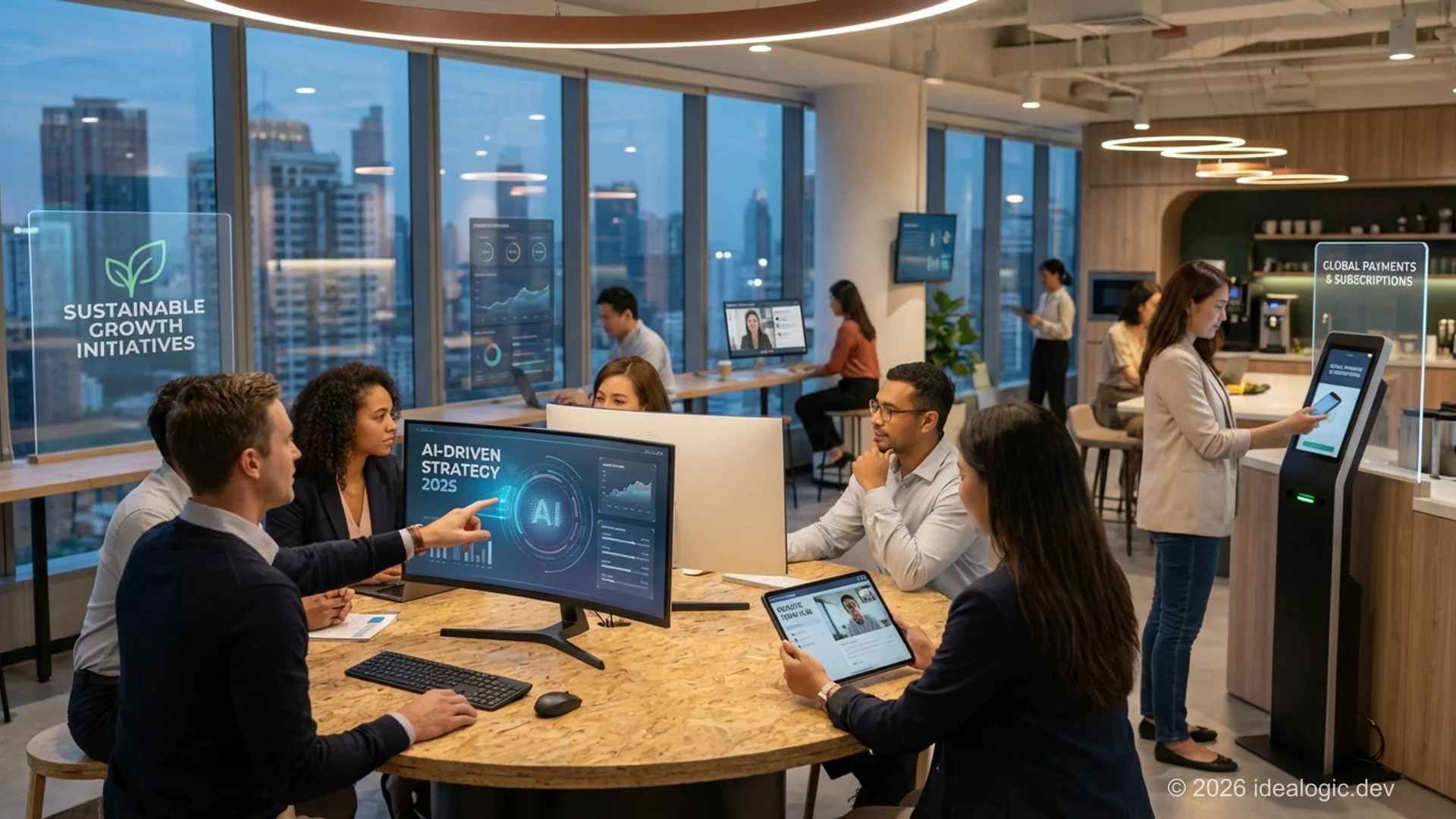
AI businesses and remote employment to sustainability, digital payments and subscriptions, 2025 will be a breakthrough year of the ongoing disruption in the industry. This is the way 5 major business trends will shape the future and what the organizations can do to keep up with those enormous changes. Business, industries and work places around the world are changing with emerging technologies, changing consumer expectations and economic turmoil at unprecedented rates. Examining how these forces will affect their organizations, the leaders are now being taught how to deal with emerging challenges like the need to meet the requirements of a future-ready workforce, the changing roles of the managers and workers, and the long-term talent shortages brought by the high change fatigue. To establish the means of surviving and success in the competitive environment, it is necessary to know how five essential trends affecting business will shape the work and relations with customers and profitability in 2025. To remain ahead of the pack, businesses need to predict and incorporate the future trends before they turn into the new normal.
Artificial Intelligence (AI) and Technology-based Innovation
Artificial intelligence (AI) is transforming the way business is conducted, making it more efficient and dramatically changing the way decisions are taken to an extent that business enterprises who are not part of the AI bandwagon can face a massive risk of being left out. AI market in the world is predicted to hit US trillion by 2030. In order to remain pertinent in this technological space, companies are advised to:
- invest in AI-driven technologies
- integrate machine learning into logistics and operations
- educate employees on how to collaborate with AI technologies
Generative AI and Automation
Businesses are now using AI-powered chatbots, automated workflows, and machine learning algorithms to optimize their operations, increase productivity and lower operational costs. Large Language Models run on generative AI such as ChatGPT and Google Bard that are able to analyze, categorize, generate, summarize and translate large amounts of text and additionally generate complex visual concepts via code are improving customer service, content generation and processing of data.
As an approach to data analytics that evaluates both present and past data to forecast the future, AI in Decision-Making enables companies to make more precise data-driven decisions.

AI Tools and Workforce Transformation
The AI tools are also assisting organizations to predict future trends in the market, enhance supply chains, and tailor customer experiences, which enables small owners of businesses to match the larger organizations.
Workforce Transformation
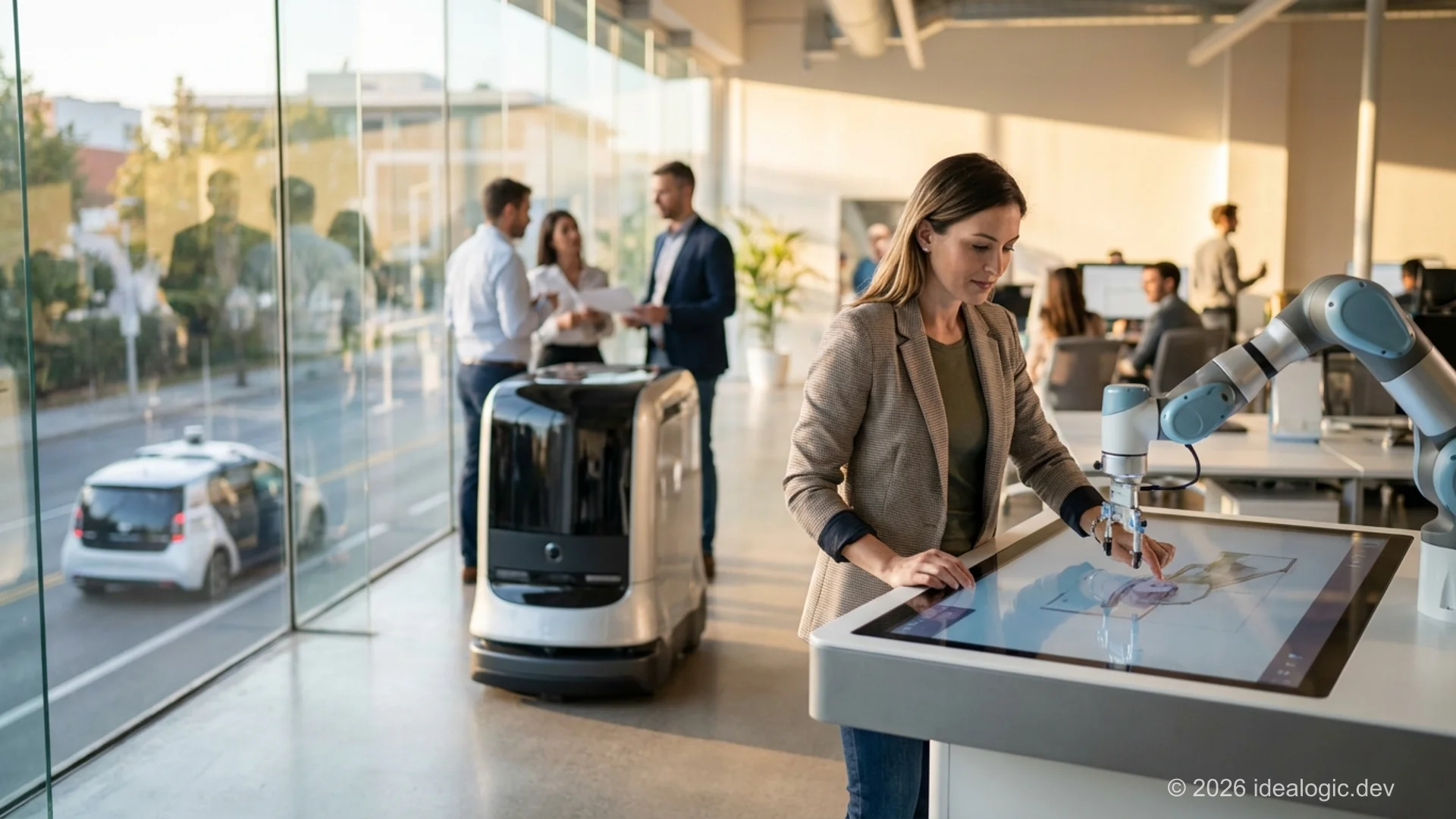
The present technological advancements have created the need to use AI and automation in the workplace to enhance efficiency forcing workers to reskill and re-train to remain in line with these accelerated technological changes. By automating repetitive processes, AI is transforming the job roles, enabling the employees to concentrate on value-added strategic jobs. To pursue the competitive edge, businesses need to make these technologies part of their operation through appropriate investments in:
- upskilling of the workers
- training on AI-human interaction
- infrastructure required to support such endeavors
E-Commerce
Online shopping was already trending pre-2020, however, with COVID-19 having reached ten years of growth in only 3 months during the pandemic, e-commerce was growing at an astronomical rate. Even though e-commerce has decelerated since the pandemic, it is rising slightly as the businesses strive to ensure that it has the greatest impact on the bottom line. Although the 2023 world e-commerce sales are at 6.3 trillion US dollars, and will grow to 8.1 trillion by the year 2026.
5G
The 5G mobile network that enables it to deliver high-speed data, with a lower latency rate and a higher degree of reliability is essential to business that allows AI, automation and other technology-driven innovations like Internet of Things (IoT) connectivity, which allows real-time data delivery and gathering of sensors, drones and wearables. Its revolution of possibilities of data collection and analysis is transforming industry possibilities to the virtual reality monitoring of equipment and machines to the remote control of traffic lights. It is certain that 5G will continue to grow very fast and is expected to reach US 797.8 billion as a global market within the next 5 years with a CAGR of 65.8.
Social Media Advertising
The company that is not in the social media will barely be known in 2025. As of October 2023, social media had about 4.95 billion users and this figure is predicted to reach over 6 billion in 2028. The amount of money being spent on ads is also rising together with consumers and is likely to grow at a CAGR of 11.7 percent and reach US 236.72 billion by 2030. In addition to advertisements, enterprises are going to invest strategically on social media communities as part of their marketing strategies to earn the loyalty of customers in the next few years.
Stay Ahead with Digital Innovation
Transform your business with AI and emerging tech. Start your digital transformation journey today.
Cyber Security and Immersive Technologies
Cyber Security
In an extremely digitalized era, data security and privacy will continue to be a priority issue to businesses and users in particular as online-based technology-driven services continue to increase. Studies indicate that cyber security is critical towards establishing and maintaining customer loyalty and trust, creating a worldwide market estimated to amount to US 500.7 billion by 2030. Some of the ways through which businesses can safeguard themselves against cybercrime include:
- ensuring that employees are kept abreast with the latest security data protecting practices
- applying multi-factor authentication
- securing the network and updating software
Immersive Technologies
The advent of the metaverse a 3-D platform where users can interact with one another and with digital objects using avatars has given new possibilities to how businesses communicate with customers in a revolutionary way. This has generated the development of immersive technology like augmented reality (AR), virtual reality (VR) and mixed reality (MR). AR, VR and MR can be used in a wide and varied industry such as:
- virtual simulations of physical spaces in architecture
- virtual patient rehabilitation and surgery simulation in healthcare
- virtual changing rooms and product try-on simulations in retail The immersive technology industry has already been estimated to be valued at almost US $28 billion in 2021 and it is projected to reach US $252 billion by 2028 a 800 per cent growth in designation of a short time of nine years.
Sustainability, the Circular Economy and Ethical Business Practices
In 2025, sustainability will cease to be a choice it will be a business requirement. The advent of investment and policies like Environmental, Social and Governance measures and the United Nations 17 Sustainable Development Goals together with the acute environmental and climate change issues are beginning to draw consumer/investor attention in a direction that would put corporate responsibility, ethical sourcing and sustainability at the top of the agenda. Circular economy is a type of closed-loop economic system that aims to minimize waste by substituting the current linear economy of production, consumption and disposal with a regenerative one, which is projected to grow enormously by 2030 with a market size of US 1.3 trillion.
Companies are moving towards circular economy, investing in green technology, using biodegradable packaging and materials that are sustainable, and creating products with a long-lasting design.
Sustainable Business Practices
At the same time, there is an increasing trend of environmentally friendly consumers opting to buy brands that design their products and services in a manner that minimizes wastes and carbon footprints. In order to manage these pressures, organizations are advised to:
- adopt clear sustainability policies
- embrace energy-saving measures
- invest in the development of products that are environmentally friendly in a bid to match consumer demands and the changes in regulations
Remote/Hybrid Work and Flexible Working Arrangements
The future of work and the way people work is changing. The expectations of workers have radically transformed after the pandemic employees are now seeking more flexibility, and companies providing hybrid work packages are getting the most talented employees. Considering a survey of 2022, 78 percent of individuals working remotely at the moment stated that they preferred to stay in the same working modality in the long run. Remote and hybrid work models will keep prevailing with the corporate world in the year 2025, which will lead to the development of technologies addressing the productivity of workers and the effectiveness of remote teamwork. The examples of remote technologies are:
- the use of VR and AR tools to improve teamwork, training and communication with clients
- cloud computing and project management software
- remote access software and video conferencing In order to stay competitive, business organizations ought to apply remote-first principles, invest in collaboration software, and design interactive virtual workplaces that support inclusiveness and productivity.
The Subscription Economy
The Subscription economy represents a type of business model in which a consumer becomes a subscriber to a product or service, which then becomes available to that subscriber without the need to purchase it. A Subscription business model has increased at an exponential rate over the last decade by 437% between 2012 and 2021. Digital content and cloud-based web services (also called Software as a Service, or SaaS) such as Netflix, Hulu and Spotify as well as vehicle rentals and subscription boxes are also introduced in healthcare, auto and even personal finance. Salvageable, repeatable, and scalable revenue streams; higher customer loyalty; and lower acquisition costs are only but a few benefits of subscription-based services to businesses. Besides, AI-based personalization can improve the experience of subscription that includes custom suggestions and member benefits. The subscription economy is also projected to generate global revenues valued at at least US $1 trillion by 2028 at least 68% higher than the current revenue of US $593 billion in 2024.
The recommendations to capitalize on this trend are to consider subscription-based pricing, customer retention, and use data-driven intelligence to optimize offerings and improve user experiences.
Digital Payments
In a world where digital economies are linked globally, it is a flexed and smooth digital payment platform that is re-defining finance and making trading between countries easier, hence enabling businesses to enter new markets easily. By 2025, digitised payment approaches through cashless, contactless and blockchain will become a common reality because they are accessible, convenient, and efficient. Google Pay and PayPal digital wallets, QR codes, facial recognition payment systems, cryptocurrencies, blockchain technology and decentralized finance are the disruptors and diminish the dependability of traditional banking services. This shift has become a major driver of inclusive growth, whereby individuals and communities within underserved markets in all parts of the world are now able to receive financial services that they had no access to before since payment infrastructure was poorly developed. It is a combination of various electronic forms of payment, the adoption of blockchain technology where possible, and adherence to changing financial laws to offer flawless customer experiences are but a few ways in which business can continue to abide by the digital payments revolution.
Final Thoughts
2025 is a year that will establish a new face in industries that will present challenges as well as opportunities. Companies that adopt AI, sustainability, remote and hybrid work, revenue models based on subscriptions and the use of digital payment innovations will have a competitive advantage in the era of disruptive industry changes. It will be important to remain agile and forward-thinking to achieve success in the long-run. In order to keep up, firms must:
- encourage the culture of flexibility
- invest in learning and growth
- keep informed of industry trends
- look avenues of innovation and adjustment to new technologies all the time Businesses can survive in ever-changing market by taking initiative to accommodate these trends to ensure long term growth.