Introduction
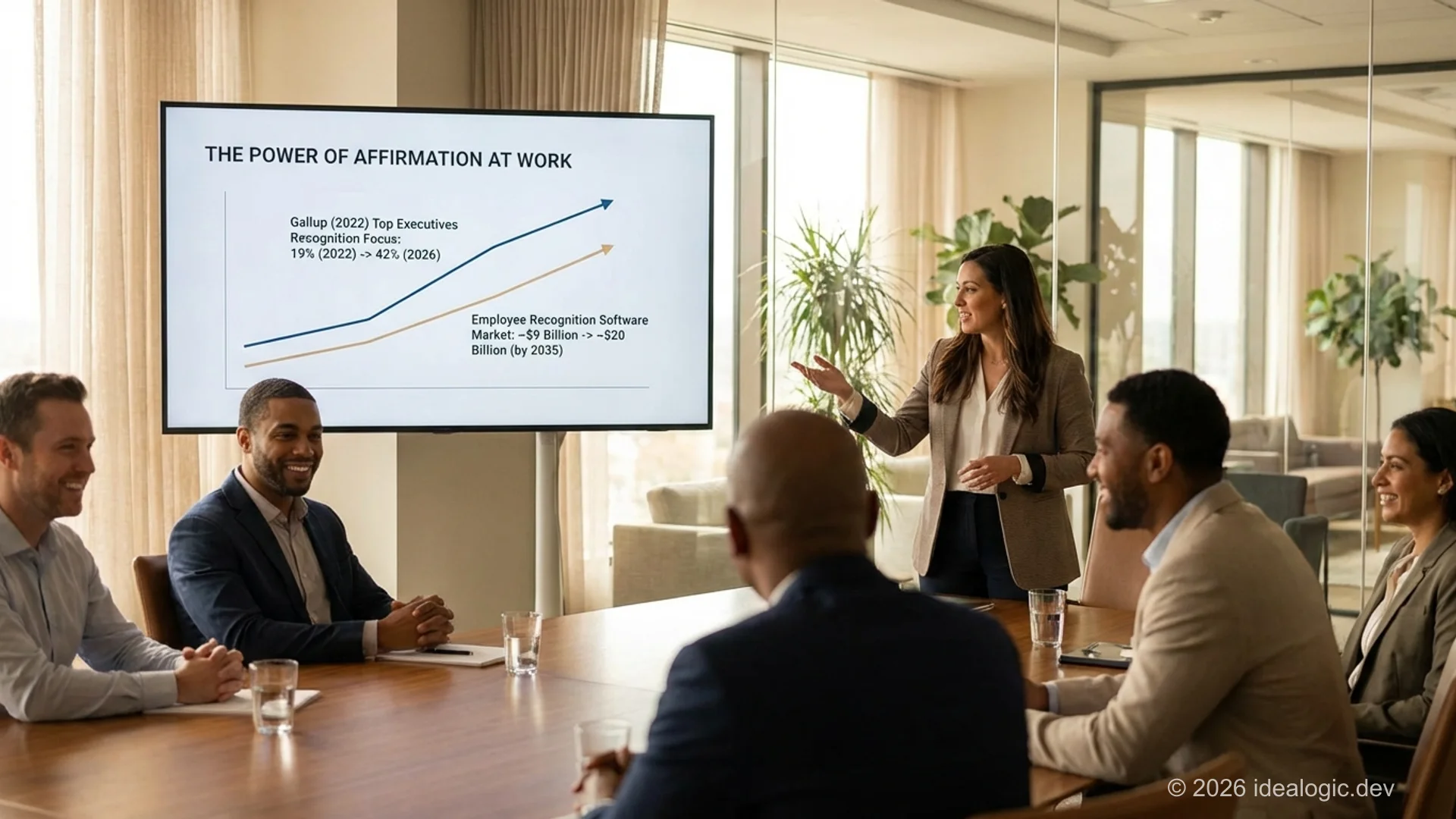
The necessity of employee appreciation and recognition is one of the concepts that spread among leaders more rapidly in the recent years. Gallup (2022) discovered that only 19 percent of top executives considered employee recognition a significant strategic focus in 2022. Over the next four years, this figure had more than doubled to 42%. In the same time, the employees recognition software business swelled to about 19 billion and is likely to soar almost 50 billion by 2035. Organizational places have initiated appreciation weeks, installed peer-to-peer praise systems that contain redeemable benefits, and have initiated award systems that are based on values. Nevertheless, regardless of the attention and investment, employees continue to complain that they feel underappreciated. Majority of them claim to not get the correct degree of recognition on the job they do; more than half say they are only somewhat valued or not valued at all, and 55% of the employees in the U.S. are not meaningfully recognized. So, what's missing?
The Power of Affirmation
In my study of mattering and the feelings that people have in the workplace, I posed a straightforward question: When do you feel most that you matter? Going by the majority of the respondents, no one talked about awards, rewards, perks, or pay increments. Rather, they wrote about brief but regular encounters with leaders who emphasized their strengths, the downstream value of their work, or how their daily work was essential. These are not instances of generic appreciation or recognition. They are states of particular confirmation - of the individual qualities and influences being perceived, called and confirmed.
Understanding the Three Types of Recognition
- Appreciation says: "Thank you that you are here."
- Recognition says: "I look at what you did."
- Affirmation says: "I know how you alone could have done it." All three are important, but appreciation and recognition is usually expressed via generalized gesture like awards, events or programs, whilst affirmation is expressed via specific and personal interactions. And what I have learned in my line of work is that in the minds of most workers, there is a lack of the day to day experience of feeling valued. The affirmation works well since human beings have the desire to feel special. Traditional studies by psychologists C.R. Snyder and Howard Fromkin reveal that individuals that identify themselves as unique in comparison to others feel more meaningful, satisfied and have higher self-esteem. This need was individuation, a need to feel that we matter, coined by social psychologist Christina Maslach. We seek distinctiveness, and this is one of the reasons why we reject generic compliments, and why perks, prizes, or even appreciation events in and of themselves rarely build any enduring interest. Individuals require real associations with leaders who provide them with signs that they can vary.
To the leaders, the difference is essential: Appreciation attaches importance to the presence and position of someone. Recognition awards the contribution of a person. Affirmation confirms the way one can be making unique difference.
Transform Your Leadership Approach
Learn practical skills to provide meaningful affirmation and build a culture where every employee feels valued.
The Skills of Affirmation
The good news is that, leaders can acquire the skills of interpersonal that they require to provide regular, valuable affirmation. It will demand that they pay attention and recognize the special gifts that people have, demonstrate to them how they are changing things, and provide meaningful recognition that authenticates their special contribution. Let's explore each in turn.
Name and Notice Unique Gifts
A teacher of mine once said to me, "You cannot read on the jar when you are in it." His remark shows how others, most notably leaders can enlighten us about what we can know yet about ourselves. This process is referred to as reflected appraisals by psychologists - the cues that we receive due to others to form our own beliefs about ourselves. To develop the perception that we are appreciated, we have to witness regular demonstrations of our appreciation. The leaders can begin by observing and identifying four fiddle gifts that all people present have, which include strengths, purpose, perspective, and wisdom. After discovering something, you can then present it to every member of the team with the use of phrases such as:
- "I can see that one of your strengths is..."
- "You make this team better by..."
- "Your point of view does come to our rescue when..."
- "Your experience is what conducts us when..."
Show People the Difference They Make
A few years ago I was introduced to an area supervisor who was recently tasked to manage a group of maintenance workers in a remote national park. Low morale and high turnover had been a long time problem with the team. However, with the new supervisor in charge, the score of the engagement survey rocketed, the turnover declined and the applicant numbers have risen. He picked up his phone when I inquired of him what he did. He photographed weekly work of his team: visitors on a bridge that was fixed, families on a new trail, or a broken restroom opening and relieved people of long queues. Then every Friday in the morning he would put the pictures on an email and forward it to his staff with a title: "Look what you did!" "My group can never doubt that they matter," he joked. "I provide them with photographic evidence." To demonstrate to people the difference they can make: Gather testimonials of how your people do something special. These are those instances that you have personally observed. It is a note on her phone that was placed by one of the leaders I worked with in the retail industry that is called Story Bank. At the end of every day, she writes about how her team members have transformed her life, or the lives of other people in the team, or the lives of their customers, and records the stories. Design a rhythm of story telling of note. Set aside some time to tell some stories of the meaning you've collected. Though it can be as effective when doing this during scheduled meetings and in one-on-ones, the individuals I have interviewed have remembered tiny even foolish moments when a leader demonstrated to them the difference they made. As an illustration, the unscheduled phone call just to inform someone that you have seen their impact or send a positive commentary of a customer or a client directly can go a long way. Use affirming language. By telling about the impact people have, when you do it, use words that remind the individual of the impact. When people say things it can be a clue as to the difference between the act and its effect such phrases as:
- "I noticed that..."
- "You may think it is small, but it made a difference when you..."
- "If it weren't for you..." In many cases, our downstream implication is not always visible unless it is uncovered to us by someone. Leaders who establish a culture in which people feel appreciated go past merely telling people that they make a difference. They always demonstrate how they impact others the way they do.
Provide Real Appreciation
The interviewees who mention that they feel appreciated at their workplaces also share that they are given a special form of appreciation instead of just a simple thank you or good job. They are provided with gratitude that lets them know what they accomplished, how, and why it was significant. This kind of appreciation provides individuals with the thing that most symbols of appreciation and recognition do not, which is, evidence of their importance.
Leaders with affirmation skills provide evidence of the special contribution. According to research this kind of affirmation leads to greater motivation, performance and productivity.
| Gift Type | Definition | Key Questions to Ask |
|---|---|---|
| Strengths | Things a person enjoys doing and does well | What are they doing when they are the best? Where do they feel most rejuvenated? What do others request their help with? |
| Purpose | Individual contribution to the group | What difference do they bring using their strengths? What would the team lose without them? |
| Perspective | How a person defines work and the world | Do they focus on opportunities, limitations or threats? What do they see that others don't? |
| Wisdom | What one has learned through life experience | What can they teach that only they know? How does their experience influence the group? |
| Element | Description | Example |
|---|---|---|
| Details | Specify where, when, and who was present | "In the middle of yesterday's meeting, when the group seemed stuck..." |
| Behaviors | Name specific actions taken | "You went to the whiteboard and had everyone explain their view and noted it..." |
| Gifts | Name the special gifts they used (strengths, purpose, perspective, wisdom) | "You used your gift of combining ideas--which people have always been able to depend on you..." |
| Impact | Show them what they accomplished | "The group walked away feeling revitalized, and I spotted them brainstorming in the hall" |
Building a Culture of Affirmation
Achieving a culture of affirmation will involve the leaders modeling such practices, enabling all the managers to also do the same and constantly reviewing whether the employees truly feel valued by the way they are interacted with on a daily basis. And when individuals believe that they matter, they present themselves as people who do. They engage, commit, and stay.
It is important to keep in mind that whenever a leader presents one with a clear evidence of his/her importance, he/she reinforces the belief of the person in his/her importance.