Introduction
The concept of robots is not new to the industrial environment, as they have been present in the last 50 years. However, in the recent past, breakthrough innovation has not been a characteristic of the industry. Preprogrammed robots had, to an extent, repetitive work, like welding or painting, and no disruption was handled. They were unable to interpret a situation and make changes to fit the situation. But that has been altered in the last three to five years, due to the advancement in technology that has seen the development of generic purpose robots that are capable of performing a number of jobs in various environments.
The Technology Breakthrough
There was no big unlock in terms of technology. Other related and complementary technologies such as:
- transformer architecture
- foundation models
- generative AI
- actuators (the robot components that make the act movements) improved at the same time.
The bimodal distribution of excitement regarding robotics is present when talking to clients. Some are overly enthusiastic and believe robots should be included in short-term strategy, while others are cynical and believe salvation is not yet 20 or 30 years away.
Evolution of Humanoid Platforms
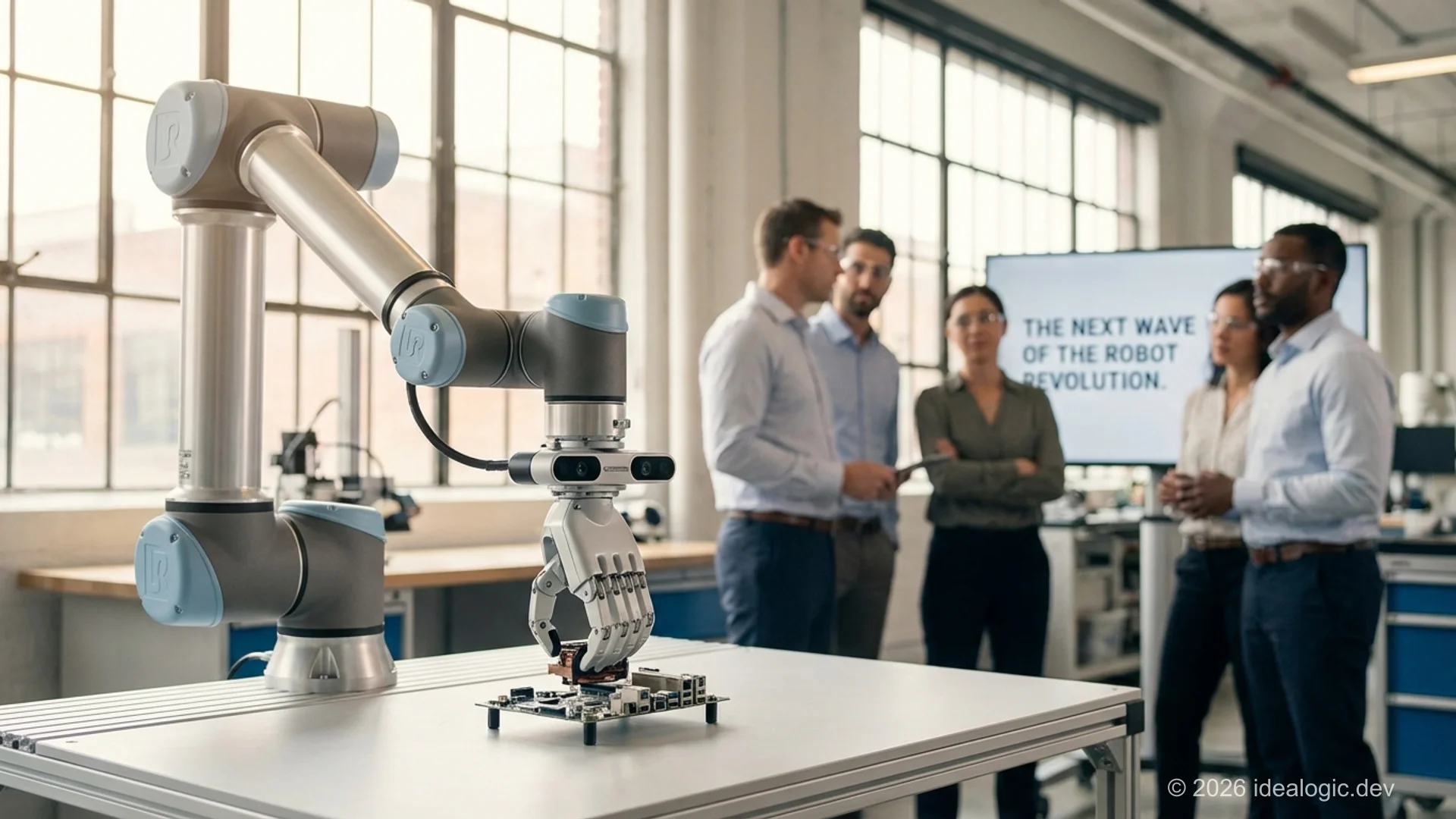
The early humanoid platform robots which are approximately the size and shape of a human and can fit into a human-designed space and context required decades to build. However, in the middle of the 2010s, some companies began to take between four and five years to create original humanoid platforms. And newer firms, which have enjoyed the recent progress, have been able to construct platforms within a year.
Current Robot Types
We will observe tremendous transformation in the nature of the robots which are applied in the workplace. Current robots are mostly:
- immobile industrial arms with up to six axes of movement
- mobile robots in logistics that are carriers of objects The two types represent the enormous share of robots in the industrial environment.
Future Robot Configurations
How that will differ in the future is hard to predict, but I believe the first generation of purpose general robots will be wheelbase mounted mobile manipulators, with arms attached to their top. The role of bipedal robots in accomplishing a reasonable portion of jobs was also possible. Such robots need to be not fully humanoid, but they will possess two legs that will make them move. Real humanoid robots would then be mass marketed but it may take months or even years to achieve its full potential.
Preparing for the Robot Revolution
Start planning your robotics strategy today. The competition for talent and technology is intensifying.
Workplace Integration and Applications
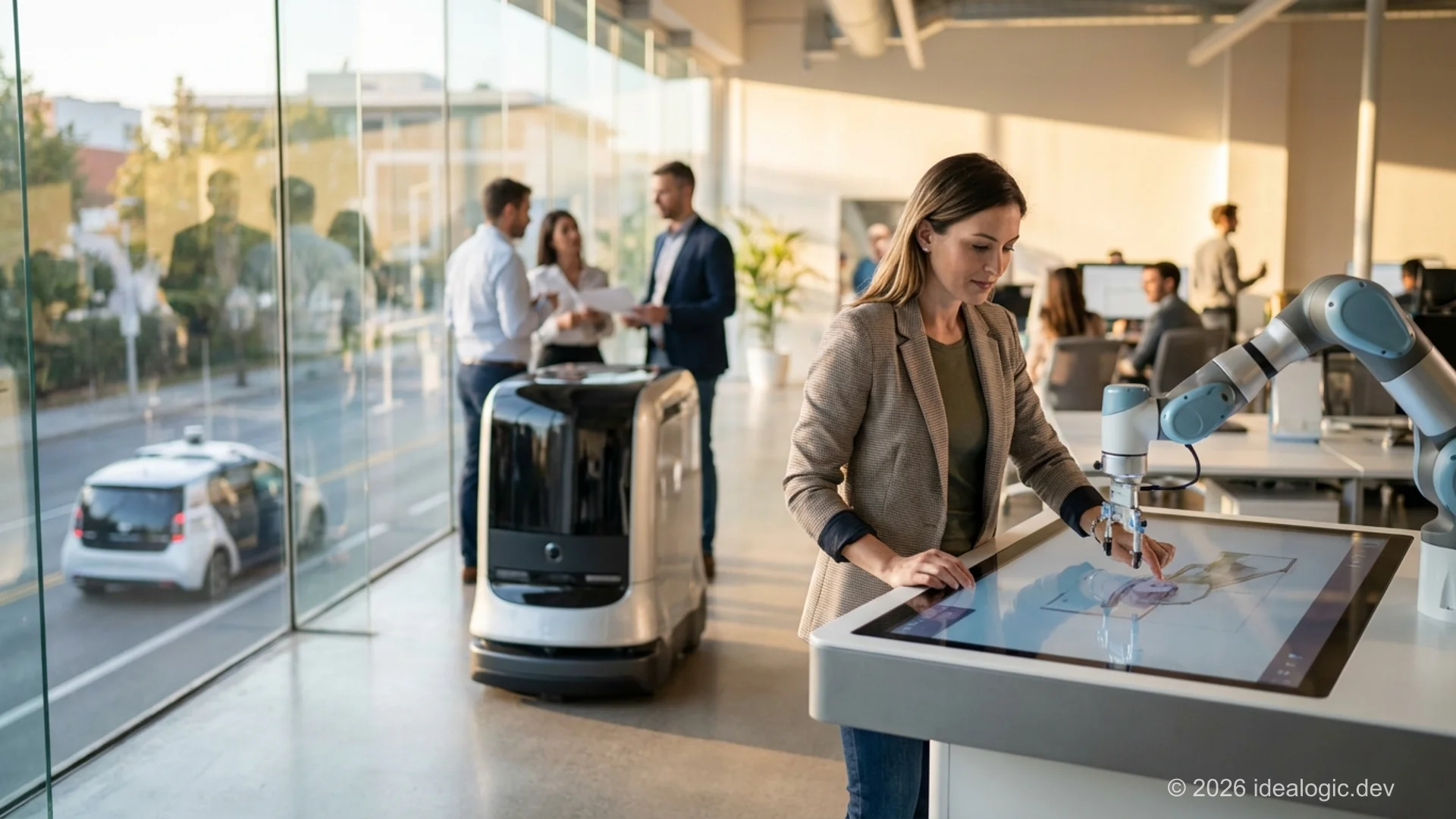
The type and quantity of the robots at the workplace will grow, but the levels of cooperation will also grow. Previously, a great deal of robots were isolated by humans (sometimes literally by cages), yet the general-use robots will be introduced into the workplace.
Industry Applications
Other, no less exciting applications will also be implemented across more sectors through the use of robots:
- Healthcare: robots transport papers, tools, and other equipment required in operations, allowing nurses to spend more time with patients
- Agriculture: robots are being applied in harvesting crops as well as in other duties like weed killing
Safety and Security Concerns
The increased application of robots will automatically increase the concern of safety.
Machine Safety
Others are connected with the safety of machines, e.g., the way how robots will react in case of a failure mode (such as the absence of connectivity or power) when mixing with humans. Nobody would like to see a humanoid robot to fall on its head as soon as it loses electricity, since it would pose danger to anyone passing around it.
Cybersecurity
Other issues are associated with cybersecurity. Robots are interconnected and we should make sure that they cannot be hacked and used in dangerous purposes.
Cybersecurity is critical. Robots are interconnected systems that must be protected from hacking and malicious use.
Technical Challenges
Other hardware and software related issues will be of concern to the companies in the upcoming years besides safety.
Hardware Limitations
Consider how hard it is to recreate a human hand. When we hold things, we squeeze and squeeze our fingers. Robot fingers are stiff and rigid, therefore, they lose some level of nuance in so far as sensing and manipulation are concerned.
Training and Data Requirements
Another problem is training robots. The foundation models that enable the robots to think do not have sufficient data and therefore the researchers are conducting simulations which produce synthetic data. Every company must be considering their data strategy in the present time. Examples of businesses that, say, use wrenches and the like to assemble products are to be considered. The information that current robots have access to may consist of a video or text message on how to assemble a product. The missing item is, e.g., an indication of the amount of force or torque that employees should use when screwing bolts. The companies might receive such data by mounting sensors on the wrench.
Preparing for the Future
Although the future is open to numerous possibilities, it is definite that companies that are interested in using robots will have to start working on change management strategies and consider adopting robots to the IT stack.
Key Questions to Consider
Do they possess employees that can:
- program robots?
- repair and maintain them?
These issues are better to be taken into account now, as the competition over talent is only going to increase.