On This Page
- Introduction
- The numbers tell the story
- AI Goes Physical: Making a Living with AI and Robotics
- The Agentic Reality Check: Ready to Work with a Silicon-Based Workforce
- The AI Infrastructure Reckoning: Optimising Compute Strategy in the Age of Inference Economics
- The Great Rebuild: Building an AI-Native Tech Organization
- The AI Dilemma: Acquiring and Capitalizing AI to Defend against cyber-crime
- The Critical Difference
- About Tech trends
Introduction
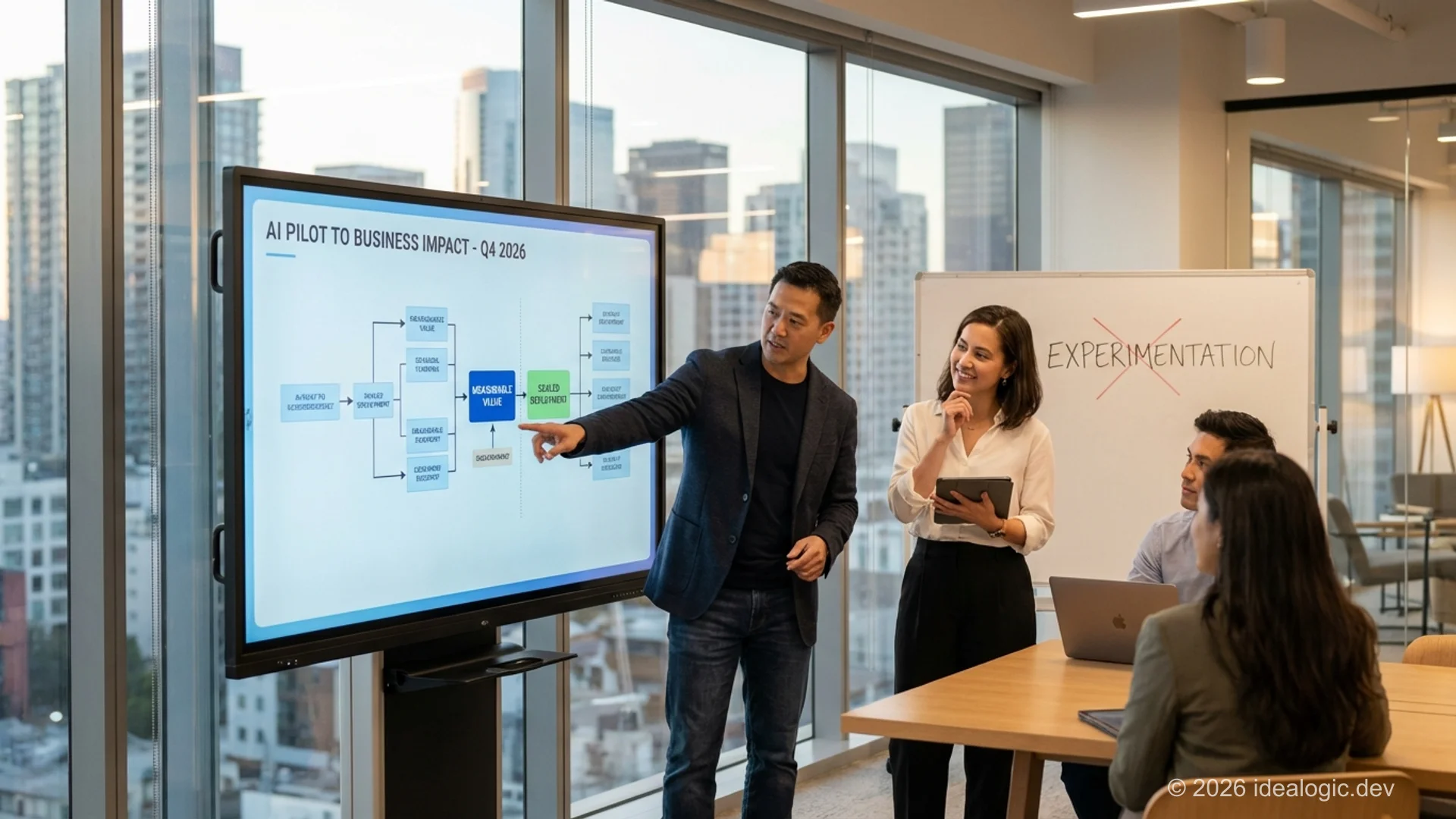
With the accelerated rate of technology innovation and adoption, there are five trends that indicate the success rate of organizations that are shifting towards impact and no longer experimentation. Most of my year is in discussions with technology executives, time spent on finding out what works, what does not, and what is their sleepless nights. In recent times, such discussions have assumed a new dimension. The question was former: What can we do with AI? Now it is "How do we get out of experimentation and into impact?" The emphasis has shifted towards the never-ending pilots to business value and the whole thing comes with a feeling of urgency. It is not that the technology is becoming better, but because the speed of change itself has increased.
The numbers tell the story
- It took 50 years of the telephone to have 50 million users
- It took seven years with the internet
- One of the most advanced generative AI applications made approximately twice as many within two months At the date of this writing, that tool has more than 800 million weekly users - about 10 percent of the population of the planet. But it is not only the surface that is adopted quickly. It is not additive, but multiplicative, and innovation is compounding.
Consider it a flywheel: More applications can be done with better technology. The more applications there are the more data they produce. Greater information is more appealing to investment. Increased investment will create superior infrastructure. Infrastructure is improved at a lower cost. The decreasing price allows greater experimentation. All the improvements contribute to the acceleration of each other simultaneously.
The reason is that AI startups are growing by four or five times more revenue per US dollar than SaaS firms. It is the reason why AI knowledge half-life has decreased to months instead of years. And this is why one chief information officer informed me: "It now takes us longer to research on a new technology than the relevance window of a technology." And it is the same thing that all the organizations that we examined are finding out: What brought them here is not going to bring them there.
- The architecture constructed on cloud-first strategies is incapable of dealing with AI economics
- Agents do not respond to processes that are designed to work with human workers
- Perimeter defense security models are not designed to withstand machine speed threats, driving adoption of zero trust security
- Service delivery based IT operating models do not transform business It is not only about improvement. It's about rebuilding. Over the last 17 years, Tech Trends has examined the emerging technologies that are likely to transform Business in the coming 18-24 months. Our study is informed by trend sensing based on discussion with experts in the subject matter and external technology leaders, as well as, research done in-house on new technologies. This year, there are five forces which are revealed in the data.
AI Goes Physical: Making a Living with AI and Robotics
Amazon has deployed its millionth robot, and its DeepFleet AI manages the complete robot fleet, enhancing the efficiency of traveling through warehouses by 10 percent. BMW factories also have cars that drive themselves over kilometer-long production paths. Intelligence is no longer a screen game but an embodiment, self-reliant and resolving real issues in the physical world.
The Agentic Reality Check: Ready to Work with a Silicon-Based Workforce
Only 11% of companies have agentic in production, even though 38% test pilot them. The difference between pilot to production speaks volumes. Only forty-two per cent are still formulating their strategy with thirty-five percent having no strategy at all. The failure rate of agentic AI projects is predicted by experts to be 40 percent by 2027, not due to lack of technology capability, but because organisations are automating dysfunctional processes rather than redesigning business.
Transform Your Business with AI
Redesign, don't automate. Move from pilot purgatory to production success with strategic AI implementation.
The reason it works is that HPE chief financial officer was able to capture the essence of the desire: "We did not want to fix a single pain point, but an end-to-end process where we could really transform." Redesign, don't automate. That is the trend of success and failure.
The AI Infrastructure Reckoning: Optimising Compute Strategy in the Age of Inference Economics
Token costs have fell 280-fold over two years; though there are enterprises which are accruing tens of millions in monthly bills. The usage increased faster than the costs reduced. Companies are finding themselves realizing that their current infrastructure plans are not in such a way as to be able to scale AI to a production-scale deployment. They are moving on a path of:
- Cloud-first to strategic hybrid
- Cloud to elasticity
- On-premises to consistency
- Edge to immediacy
The Great Rebuild: Building an AI-Native Tech Organization
AI is reorganizing tech companies, which makes them leaner, faster, and more strategic. Few IT leaders (1 percent of those surveyed) stated that they did not have any significant changes to their operating models. Leaders are moving away incremental IT management, to coordination of human-agent teams, and CIOs have become AI evangelists.
It takes radical rethinking: modular architectures, embedded governance, and constant evolution as key competencies to be successful.
The AI Dilemma: Acquiring and Capitalizing AI to Defend against cyber-crime
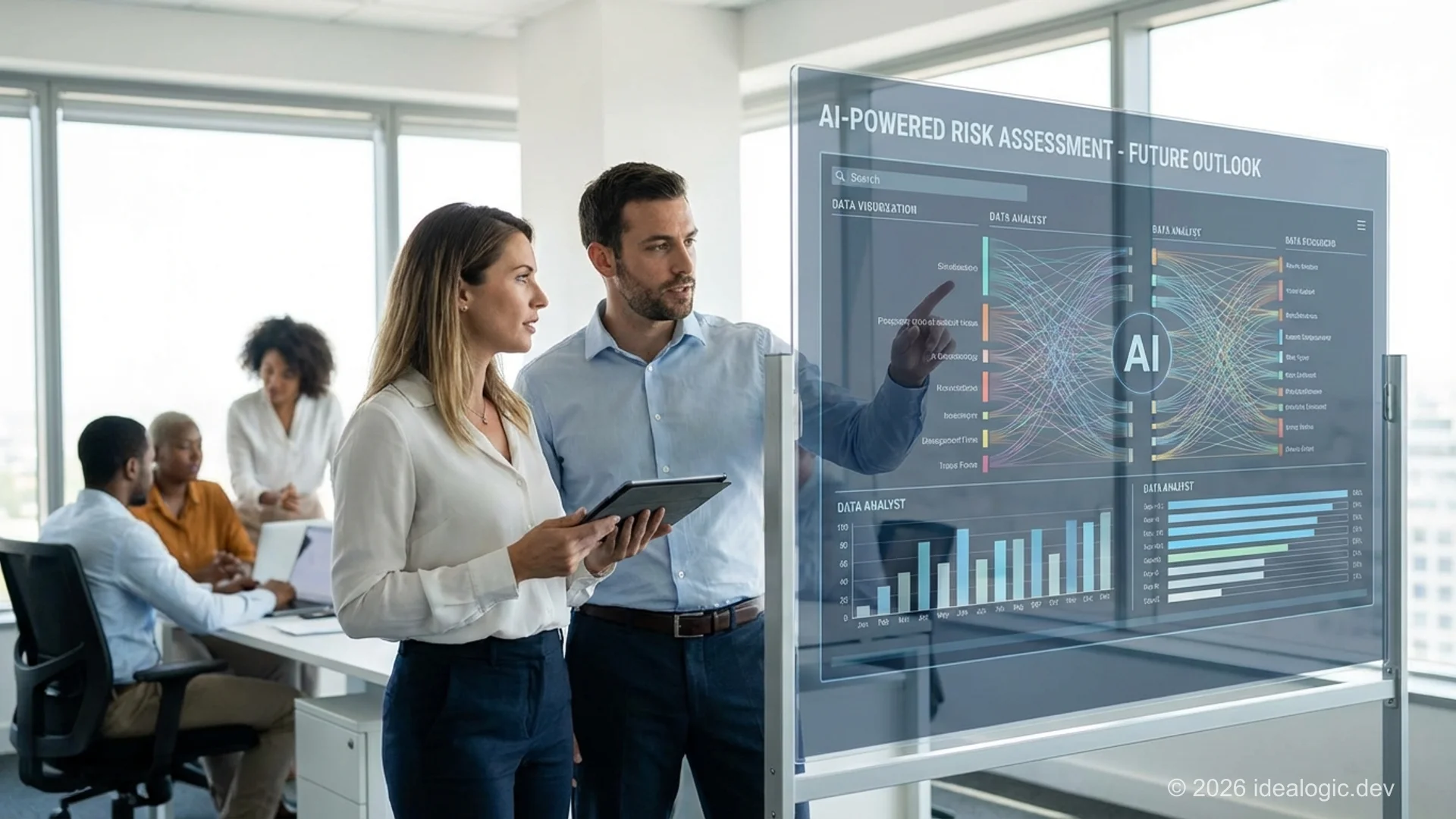
The technology that was to be employed to provide businesses with an upper hand, now turns against them. The issue was summed up by the chief information security officer of AT&T: "What we are witnessing today is no different than what we witnessed in the past. It is just a matter of speed and impact that is different with AI." It is necessary that organizations should secure AI on four fronts:
- Data
- Models
- Applications
- Infrastructure Yet they could also apply AI-based defenses to combat threats which could act at machine speed.
Key Success Patterns from Technology Leaders
You will come across technology leaders who are sailing in this sea change successfully through this report of this year. They themselves do not know it all, but show some trends in the dark as they shine the light ahead.
They are problem driven and not technology driven
One CIO observed: "Not spending much time on a particular business issue and value that you want to receive, it might be easy to invest in AI and get nothing back."
They tackle their most significant issues
One of the CEOs said: "Instead of going into a loop of continuous demonstrations of concept, attack your biggest problem and aim at a big outcome."
They are not concerned with perfection, but with speed
In other words, another CIO wrote: "We would prefer to fail fast on small pilots than be behind the curve altogether."
They design not only to them but to people
Walmart engaged store associates to develop the scheduling application that comprises of shift swapping, schedule visibility, and employee control. The outcome: The time spent on scheduling decreased to 30 minutes (previously was 90 minutes), and individuals used the app.
They consider change as a continuous process
The CIO of Coca-Cola referred to their experience as changing to "What can we do?" to "What should we do?" And that change--the change, which is between the ability-first and the need-first--is what the difference is between productive experimentation and pilot purgatory.
The barrier between the new and mainstream is disappearing. Organizations that are designed to go through successive additions cannot compete with organizations that go through incessant improvement cycles.
The Critical Difference
I have followed the development of technology long enough to understand the trends. The internet revolutionized everything. Mobile transformed the consumer behavior. Cloud computing was disruptive. But this moment is different. It is not only that AI is powerful. It is because the S-curves are shrinking. The barrier between the new and mainstream is disappearing. Organizations that are designed to go through successive additions cannot compete with organizations that go through incessant improvement cycles. The classic playbook presupposed the time to get it right. This assumption is no longer true. It is very unlikely that the successful organizations will be the most advanced in terms of technology. They will be the ones:
- Willing to redesign and not automate
- Willing to have the discipline to relate every investment to business results
- Willing to move with the speed necessary to get things done before time runs out Innovation compounds. The difference between laggards and leaders increases by a better margin. It depends on how you react that you are either on this side of that divide. You need not work your way through this single-handedly. We hope that this year of publication will remind you that everybody is struggling with this accelerated rate of change, and we all can have a say in defining the future. Kelly Raskovich Executive editor, Tech Trends Kelly Raskovich is a Senior manager and head of the Office of the CTO, who also happens to be the executive editor of Tech Trends. Her objectives are to educate clients, define the future of the technology brand and offerings, nurture talent and empower business to realize future growth. She has the roles of eminence in technology, engagement with clients, and marketing. Before her leadership position, she was in charge of a number of data and analytics projects in global Fortune 500 organizations in the oil and gas industry.
About Tech trends
Tech Trends report is an annual publication of the Office of the CTO, which features stories about leading organizations that have been innovating in the use of new technologies and methods. Based on the experience of the technology industry heavy weights and interviewing the technology leaders of the major companies and innovative startups, as well as surveys and secondary research, the report throws a light of the tech trends that will become the norm within the next 18 to 24 months.
Tags
On This Page
- Introduction
- The numbers tell the story
- AI Goes Physical: Making a Living with AI and Robotics
- The Agentic Reality Check: Ready to Work with a Silicon-Based Workforce
- The AI Infrastructure Reckoning: Optimising Compute Strategy in the Age of Inference Economics
- The Great Rebuild: Building an AI-Native Tech Organization
- The AI Dilemma: Acquiring and Capitalizing AI to Defend against cyber-crime
- The Critical Difference
- About Tech trends